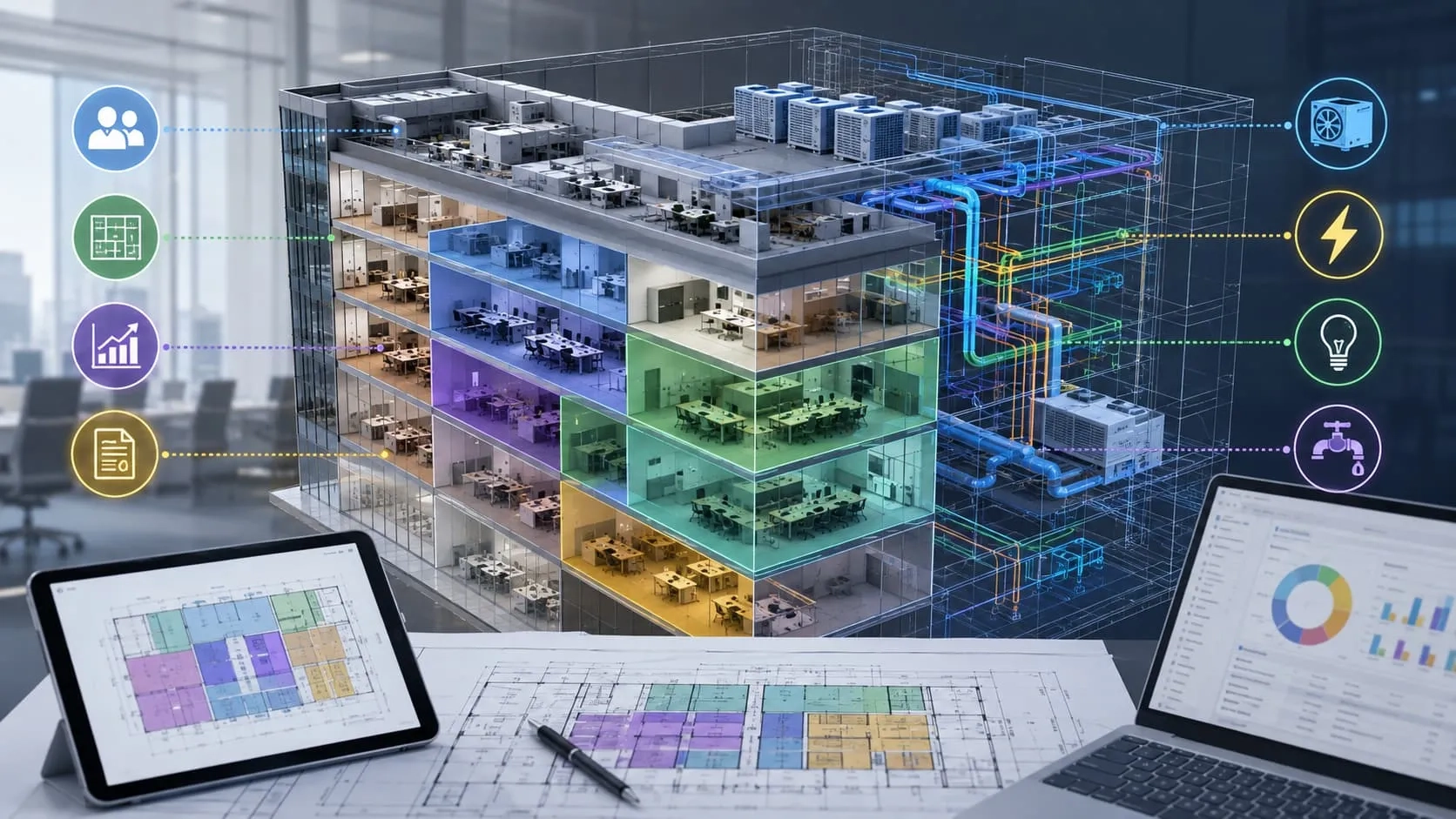
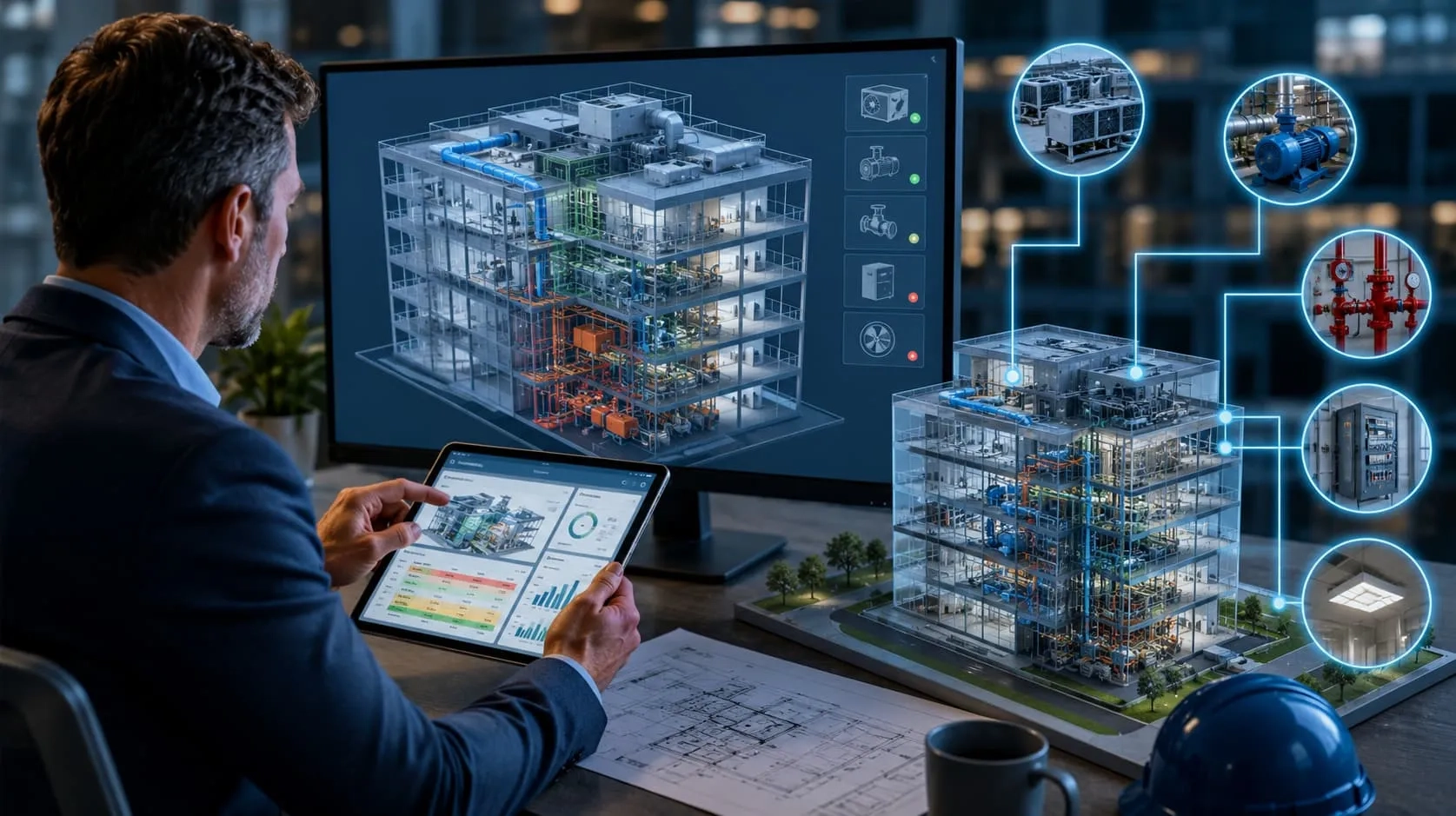
Across today’s AEC industry, projects are getting larger, timelines tighter, and client expectations higher than ever. Yet many teams are still struggling with fragmented workflows, coordination clashes, and costly rework that could have been avoided early on. As the shift toward digital delivery and BIM standards accelerates globally, relying on traditional methods is no longer sustainable. This is where Autodesk Revit BIM services are making a real difference—helping teams work smarter, coordinate better, and deliver projects with greater certainty. In this article, we’ll break down how Revit BIM services enable AEC companies to cut costs, minimize errors, and stay competitive in today’s fast-evolving construction landscape.
What Are Revit BIM Services?
Revit BIM services refer to the use of Autodesk Revit to create intelligent, data-rich 3D models that support the entire lifecycle of an AEC project—from design to construction. Unlike traditional drafting, these models are not just visual representations but integrated systems where every element carries real project information.
Typically, Revit BIM services include:
- 3D Modeling for Architecture, Structure, and MEP systems within a unified environment
- Clash Detection to identify and resolve conflicts before construction begins
- Shop Drawings generated directly from the model for accurate construction documentation
- BIM Coordination to ensure seamless collaboration across all disciplines
By combining these capabilities, Revit BIM services enable teams to work more efficiently, reduce errors, and deliver projects with greater confidence.
Where AEC Projects Commonly Fail
In many AEC projects, issues don’t come from a single major mistake—but from a series of small gaps in coordination, communication, and execution. These gaps often go unnoticed in early stages, but once they accumulate, they can significantly impact cost, schedule, and overall project quality.
Coordination Issues
Different disciplines—architecture, structure, and MEP—often develop their designs in parallel, but not always in full alignment. As a result, clashes such as ducts intersecting beams or pipes conflicting with columns are quite common.
These issues are rarely identified immediately. Instead, they tend to surface during coordination reviews or, worse, during construction.
👉 Impact: Each clash requires redesign, re-coordination, and approval cycles, leading to delays and interrupting construction workflows.
Late Error Detection
One of the most costly problems in AEC projects is discovering errors too late. When design inconsistencies are only identified on-site, the cost of fixing them increases dramatically.
For example, a misaligned MEP system may require partial demolition, reinstallation, and additional labor—all under tight time pressure.
👉 Impact: Late-stage corrections not only increase direct costs but also cause schedule overruns and disrupt multiple dependent tasks.
Fragmented Information
In many projects, data is scattered across different platforms—CAD files, PDFs, spreadsheets, and emails. Without a centralized system, teams often work with outdated or inconsistent information.
Version mismatches, missing updates, and unclear data ownership can easily lead to confusion.
👉 Impact: Decisions are made based on incorrect data, resulting in errors, rework, and reduced confidence across stakeholders.
Limited BIM Resources
As BIM becomes more widely adopted, the demand for skilled professionals continues to grow. However, many organizations struggle to find or maintain a team with the right level of expertise—especially for complex projects requiring coordination and quality control.
This often leads to overloaded teams, inconsistent modeling standards, or incomplete coordination processes.
👉 Impact: Projects may experience slower progress, reduced model quality, and increased risk of errors slipping through.

Taken together, these challenges reveal a common pattern: projects are not failing due to lack of effort, but due to lack of integration and early coordination. Addressing these issues requires a more structured and intelligent approach—this is where Revit BIM services play a critical role.
How Revit BIM Services Improve Project Performance
Revit BIM services do more than just digitize drawings—they fundamentally improve how AEC projects are planned, coordinated, and delivered. By shifting from fragmented workflows to a unified, model-based approach, teams can reduce risks, improve efficiency, and make better decisions throughout the project lifecycle.
Integrated 3D Modeling
Using Autodesk Revit, all disciplines—architecture, structure, and MEP—are developed within a single coordinated model. Instead of working in isolation, teams contribute to a shared environment where every element is interconnected. This significantly reduces design conflicts and ensures better alignment across disciplines from the early stages.
Early Clash Detection
One of the most critical advantages of BIM is the ability to detect clashes before construction begins. Potential conflicts between systems can be identified and resolved during the design phase, when changes are faster and less costly. By addressing issues early, projects can avoid expensive rework, minimize disruptions, and maintain a more predictable schedule.
Centralized Data Environment
Revit BIM creates a single source of truth where all project data is stored, updated, and accessed in a consistent manner. Changes made in the model are automatically reflected across views, drawings, and schedules. This eliminates version mismatches, reduces errors caused by outdated information, and improves overall data reliability.
Streamlined Collaboration
With a shared model and synchronized workflows, project teams can collaborate more effectively—regardless of location or discipline. Updates are visible in real time, and coordination becomes a continuous process rather than a series of isolated reviews. Teams can work more efficiently, respond faster to changes, and maintain better alignment throughout the project.
👉 By integrating modeling, coordination, and data management into a single workflow, Revit BIM services help AEC teams move from reactive problem-solving to proactive project control—resulting in better performance across cost, quality, and delivery.
Typical Deliverables You Can Expect
When working with Revit BIM services, the outputs are not abstract models or theoretical files—they are practical deliverables that teams can directly use for coordination, construction, and cost control. Each deliverable plays a clear role in the project workflow.
BIM Models (Architecture, Structure, MEP)
These are coordinated 3D models developed in Autodesk Revit, representing the actual building systems in a highly detailed and structured way.
- Revit Architectural BIM model: walls, floors, ceilings, doors, and finishes
- Revit Structural BIM model: columns, beams, slabs, and foundations
- Revit MEP BIM model: ducts, pipes, cable trays, and equipment
Each model is created as part of a unified environment, where all disciplines are spatially and technically aligned. This ensures that every element—from structural components to MEP systems—fits together accurately within the overall design.
👉 As a result, these models can be directly used for coordination, design validation, and construction planning, rather than just visualization.
Shop Drawings (Construction-Ready Drawings)
Derived directly from the BIM model, these drawings are used by contractors on-site.
- Plan views, sections, and detailed layouts
- Installation drawings for MEP systems
- Accurate dimensions and positioning
👉 Instead of interpreting design drawings, teams can build directly from these documents with minimal ambiguity.
Clash Detection Reports
Reports generated from coordination processes that identify conflicts between systems.
- MEP vs structure (e.g., duct hitting beam)
- Pipe routing conflicts
- Clearance issues for maintenance
👉 These reports allow teams to resolve problems before construction, avoiding costly on-site fixes.
Quantity Takeoff (BOQ Support)
Material quantities extracted directly from the model.
- Concrete volume, steel weight
- Duct lengths, pipe quantities
- Equipment counts
👉 Used for cost estimation, procurement, and budgeting, with higher accuracy than manual methods.
Revit Families (Project-Specific Components)
Custom-built components used within the model.
- Equipment (AHU, pumps, lighting fixtures)
- Architectural elements (doors, windows)
- Parametric objects with adjustable properties
👉 These ensure the model reflects real-world components, making coordination and documentation more reliable.
What ultimately matters is not just what is delivered, but how effectively those deliverables support real project execution. This is where Harmony AT’s Revit BIM services bring real value. With a strong focus on coordination, consistency, and usability, the team ensures that every BIM output—from models to drawings—is aligned with practical construction needs. By combining technical expertise with a structured workflow, Harmony AT transforms BIM deliverables into reliable tools that improve decision-making, reduce risks, and streamline project delivery from design through construction.
If you’re looking for a dependable partner to support your next project, Harmony AT’s Revit BIM services can help you move forward with greater confidence and control.
Categories