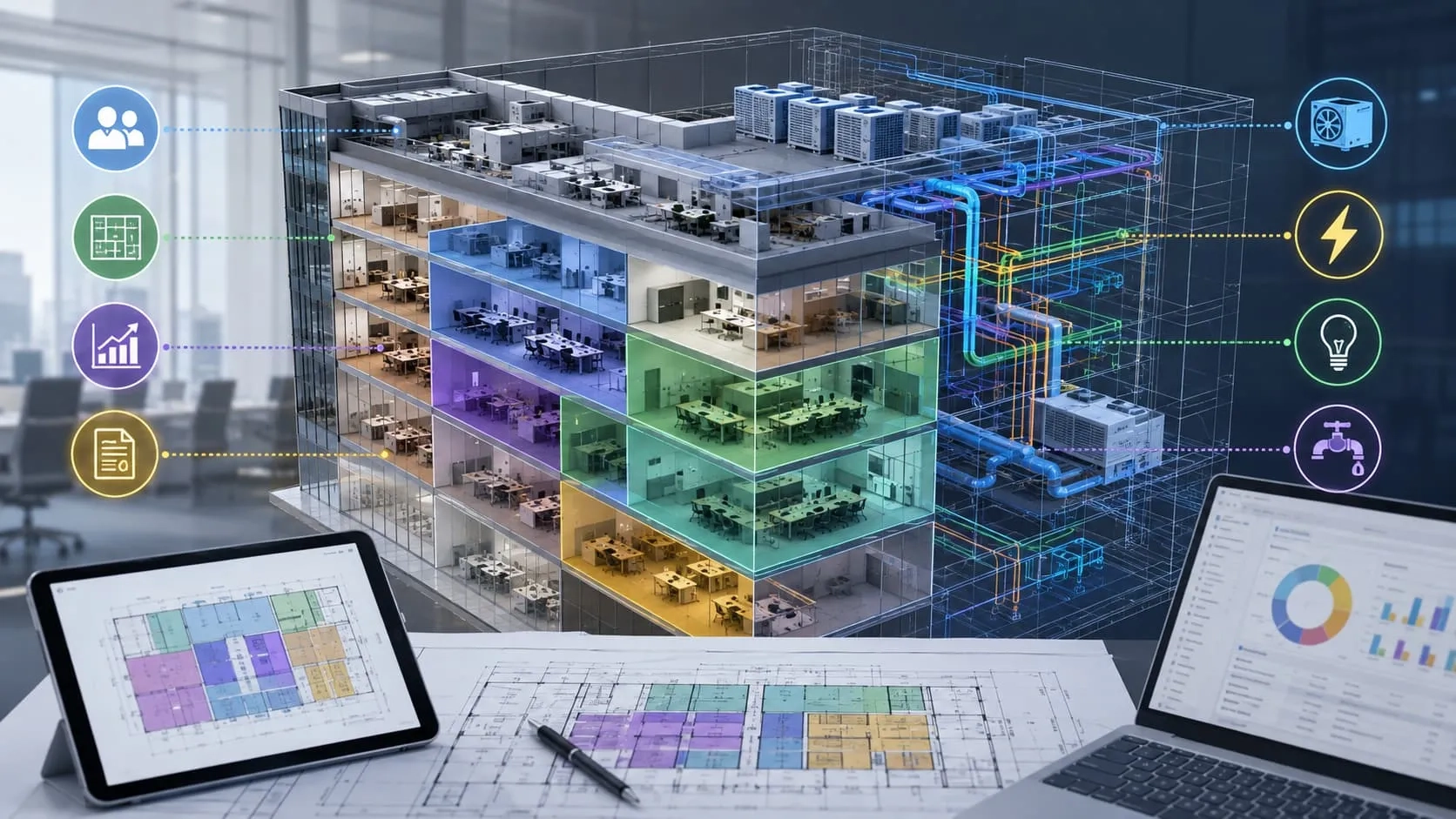
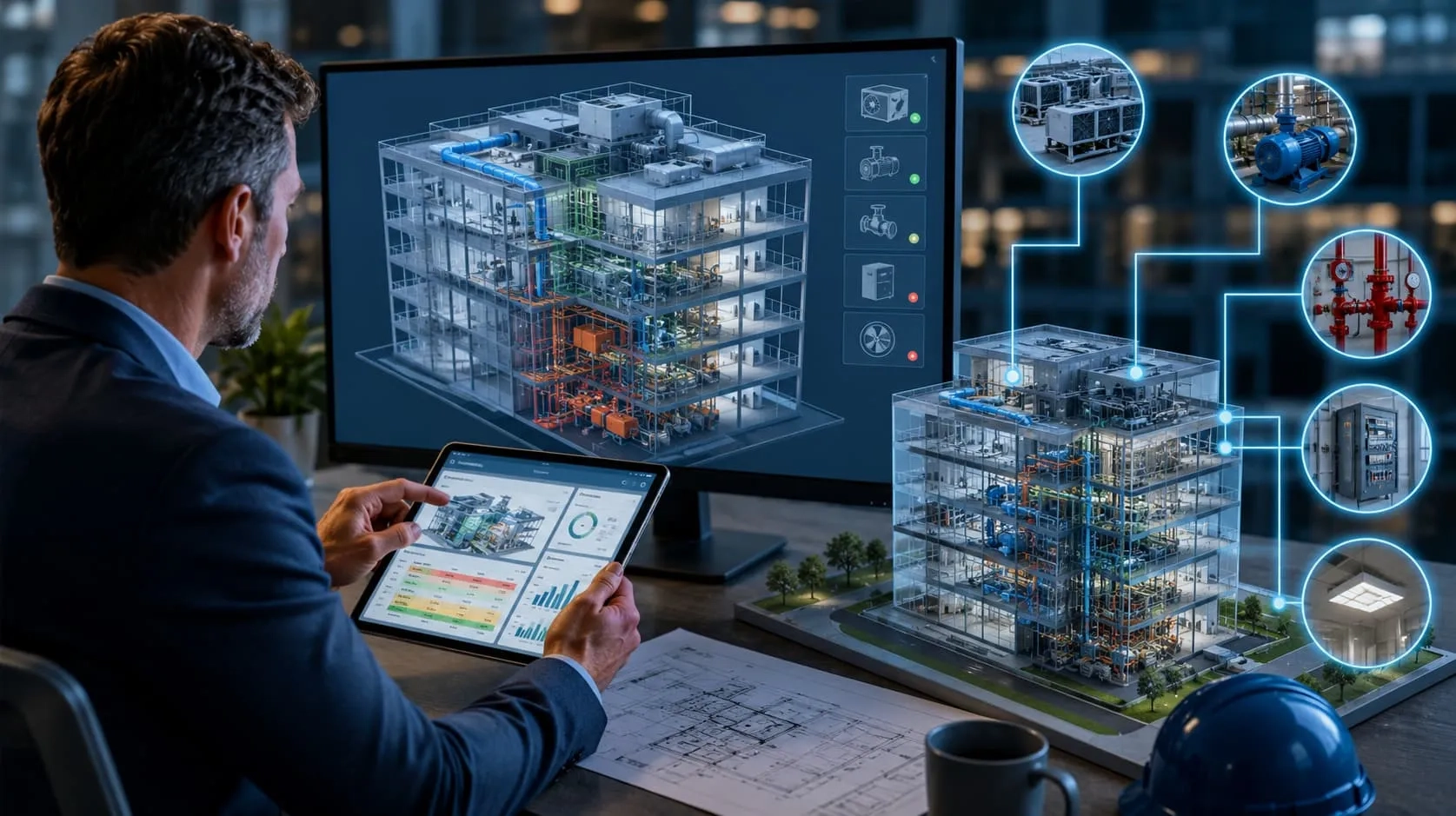
Designing nursing facilities is far more complex than typical building projects. These environments must support vulnerable users, enable efficient medical workflows, and provide a sense of comfort and dignity—all while meeting strict safety standards and operating continuously over decades. Balancing these competing demands is a significant challenge for architects, engineers, and operators alike. In this article, we explore the unique complexities of nursing facility design and how Building Information Modeling (BIM) helps overcome them to create spaces that are not only functional, but truly supportive of care and long-term performance.
The Hidden Complexity of Nursing Facility Design: Why These Projects Are Uniquely Challenging
Designing for Vulnerable Users with Diverse Needs
Nursing facilities must accommodate a wide spectrum of users, including elderly residents, rehabilitation patients, and individuals with limited mobility, each requiring different levels of care—from long-term medical support to assistance with daily activities. As a result, spaces must be designed to be not only safe but also intuitive and comfortable for people with varying physical and cognitive conditions, making it inherently challenging for a single design to effectively serve multiple user groups with different levels of dependency.
Balancing Clinical Efficiency and Residential Comfort
Unlike traditional building types, nursing facilities must function as both healthcare environments and living spaces. They need to support efficient and accurate clinical workflows while simultaneously providing a warm, home-like atmosphere that promotes emotional well-being and dignity for residents, creating a constant tension between operational efficiency and human-centered comfort.
Complex Circulation and Functional Zoning
Nursing facilities require highly organized circulation systems to manage the movement of patients, staff, visitors, and medical supplies. These flows must be carefully separated yet seamlessly integrated to avoid cross-contamination risks, operational disruptions, and unnecessary travel distances, making spatial planning and zoning far more complex than in typical building projects.
Strict Safety and Accessibility Requirements
Safety and accessibility are fundamental in nursing facility design, requiring barrier-free environments that support wheelchairs and stretchers, as well as robust emergency response systems and fall-prevention measures for elderly residents. These strict requirements must be integrated without compromising the overall comfort, usability, and aesthetic quality of the space.
High Demands on Indoor Environmental Quality
The indoor environment plays a critical role in the health and well-being of residents, with factors such as natural lighting, ventilation, air quality, and noise control directly affecting recovery and daily comfort. Designing spaces that meet these high environmental standards while maintaining energy efficiency and system performance is a complex and delicate balance.
Intensive MEP Systems and Medical Infrastructure
Nursing facilities depend heavily on complex mechanical, electrical, and plumbing (MEP) systems that must operate reliably around the clock. From HVAC systems that regulate temperature and air quality to water supply, electrical networks, and medical gas systems, these infrastructures are not only technically demanding but also critical to life and continuous care.
Durability in High-Usage, High-Wear Environments
With constant use from wheelchairs, hospital beds, and medical equipment, nursing facilities are exposed to high levels of wear and tear. Materials and finishes must be durable, slip-resistant, easy to clean, and compliant with strict hygiene standards, requiring careful selection to balance longevity, safety, and maintenance efficiency.
Long-Term Operation and Maintenance Pressure
Designed to operate continuously over decades, nursing facilities face significant long-term maintenance and operational challenges. Decisions made during the design phase have a direct impact on lifecycle costs, making it essential to consider durability, maintainability, and efficiency from the very beginning.
Regulatory and Compliance Complexity
Healthcare-related projects must comply with a wide range of strict and evolving regulations, including safety, hygiene, accessibility, and fire protection standards. Ensuring full compliance throughout the design and construction process adds another layer of complexity and requires careful coordination and control.
Need for Flexibility and Future Adaptation
As healthcare needs continue to evolve, nursing facilities must be designed with flexibility in mind. This includes the ability to adapt to new care models, support renovations or expansions, and integrate emerging technologies such as smart systems and IoT, ensuring that the facility remains functional and relevant over time.
How BIM Solves the Complexity of Nursing Facility Design
Addressing Diverse User Needs with Data-Driven Design
BIM enables project teams to build highly detailed 3D models that go beyond geometry by embedding user-related data into the design. Designers can simulate how elderly residents, wheelchair users, caregivers, and medical staff interact with spaces—such as maneuvering through corridors, accessing bathrooms, or transferring patients between beds and equipment. These simulations allow teams to test different layout options, adjust room dimensions, and refine accessibility features before construction begins, ensuring that the final design truly accommodates users with varying physical and cognitive conditions.
Balancing Clinical Efficiency and Residential Comfort
Using BIM, designers can analyze both operational workflows and spatial experience within the same environment. For example, nurse travel paths can be mapped and optimized to reduce response time, while at the same time, daylight analysis can be used to enhance room comfort and reduce stress for residents. BIM allows teams to compare multiple design scenarios—such as centralized vs. decentralized nurse stations or different room configurations—and evaluate their impact on both efficiency and comfort, enabling more informed and balanced design decisions.
Optimizing Circulation and Functional Zoning
BIM provides tools to visualize and simulate movement flows throughout the facility. Designers can clearly map separate pathways for staff, patients, visitors, and medical supplies, ensuring that these flows do not conflict. By identifying bottlenecks, overlaps, or inefficient routes early, teams can redesign layouts to shorten travel distances, improve response times, and reduce infection risks. This level of visibility is difficult to achieve with traditional 2D drawings.
Ensuring Safety and Accessibility Compliance
With BIM, safety and accessibility requirements can be integrated directly into the model. Designers can check corridor widths, turning radii for wheelchairs, door clearances, and emergency evacuation routes in real time. In more advanced workflows, rule-based checking tools can automatically validate designs against local codes and healthcare standards, reducing human error and ensuring compliance from the early stages of the project.
Enhancing Indoor Environmental Quality through Simulation
BIM integrates with performance analysis tools that simulate environmental conditions such as daylight distribution, airflow, temperature, and acoustics. For example, designers can evaluate how natural light enters patient rooms at different times of the day or how ventilation systems distribute fresh air across spaces. These insights allow teams to optimize window placement, HVAC design, and material selection to create healthier and more comfortable indoor environments.
Coordinating Complex MEP Systems with Precision
In nursing facilities, MEP systems are highly dense and interconnected. BIM allows all disciplines—architectural, structural, and MEP—to work within a single coordinated model. Clash detection tools automatically identify conflicts, such as ducts intersecting with beams or pipes overlapping with electrical systems, before construction begins. This reduces on-site issues, avoids costly rework, and ensures that critical systems like HVAC and medical gas pipelines are installed correctly and function reliably.
Improving Durability through Better Material Planning
BIM enables teams to attach detailed information to materials, including specifications, performance data, and maintenance requirements. Designers can evaluate different material options based on durability, slip resistance, hygiene, and lifecycle performance. For example, flooring materials can be selected not only for aesthetics but also for their ability to withstand heavy equipment use and frequent cleaning, ensuring long-term performance in high-traffic areas.
Reducing Lifecycle Costs with Predictive Insights
By incorporating cost data and maintenance information into the BIM model, stakeholders can perform lifecycle cost analysis early in the design process. This allows them to compare different design and material options based on long-term operational costs rather than just initial investment. As a result, decisions can be made to reduce maintenance frequency, extend equipment lifespan, and optimize overall cost efficiency over decades of operation.
Streamlining Compliance and Documentation
BIM centralizes all project information into a single source of truth, making it easier to manage documentation and ensure consistency across disciplines. Any design changes are automatically updated across drawings, schedules, and reports. This reduces errors, improves coordination, and simplifies the process of demonstrating compliance with regulatory requirements during approvals and audits.
Enabling Flexibility and Future-Ready Design
BIM creates a digital asset that continues to provide value after construction. Facility managers can use the model to track equipment, plan maintenance, and manage space utilization. When upgrades or renovations are needed, the existing BIM model provides accurate data for faster and more efficient modifications. Additionally, BIM serves as a foundation for integrating smart technologies, such as IoT sensors and digital twins, enabling nursing facilities to evolve with future healthcare needs.
By transforming fragmented workflows into a coordinated, data-driven process, BIM allows stakeholders to better understand, predict, and manage the complexity of nursing facility design. The result is not just a well-built structure, but a high-performing environment that delivers safety, comfort, durability, and long-term operational efficiency.
From Complexity to Clarity
Nursing facilities demand more than good design—they require precision, coordination, and long-term thinking from day one. The difference between a project that struggles and one that performs well often comes down to how effectively complexity is managed early in the process.
Build It Right with Harmony AT
That’s where Harmony AT comes in. We help you turn complex requirements into clear, coordinated, and buildable solutions through advanced BIM workflows—ensuring your project moves forward with confidence, not uncertainty.
👉 Planning a nursing facility project? Let Harmony AT help you get it right from the start.
Categories