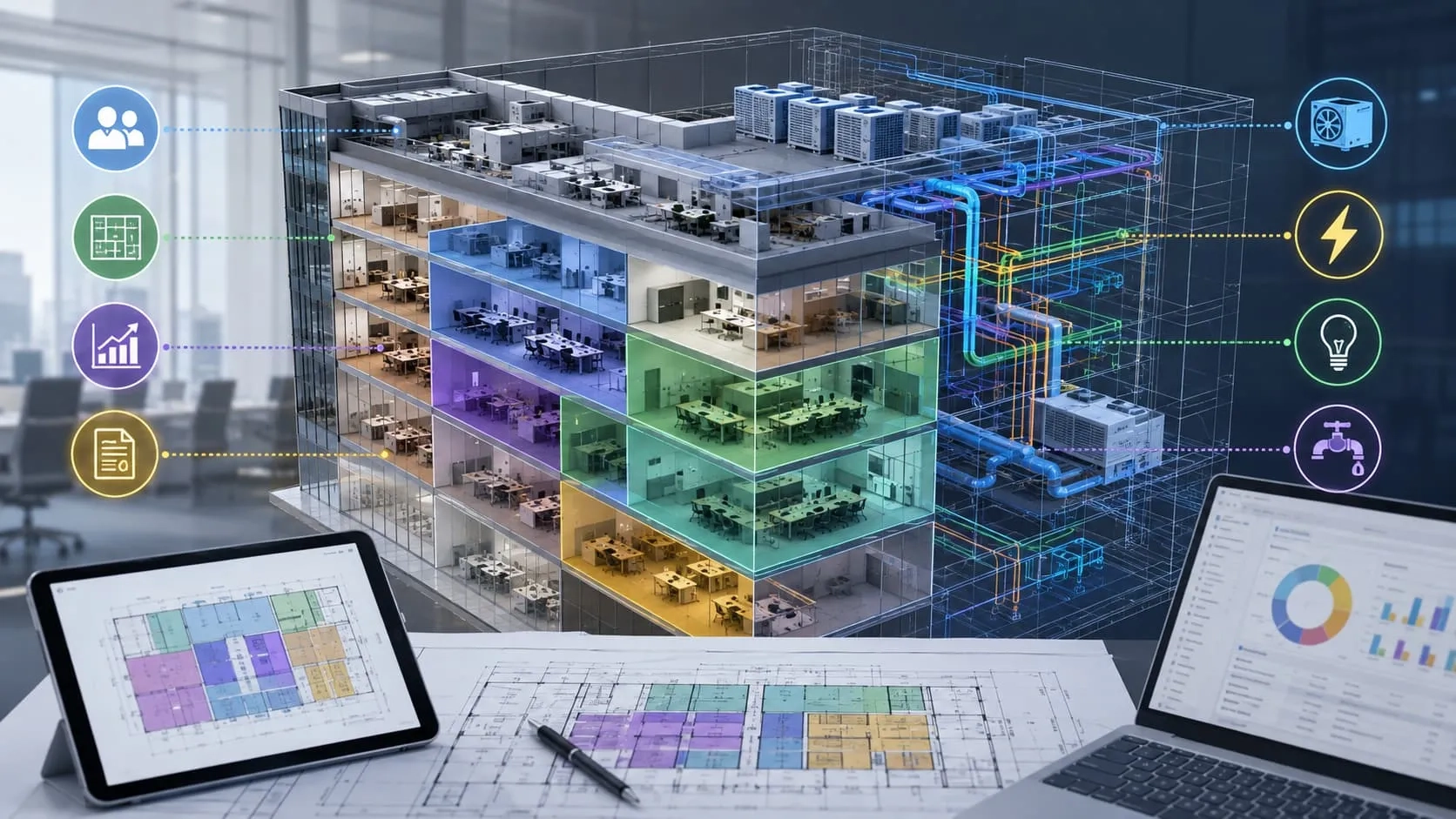
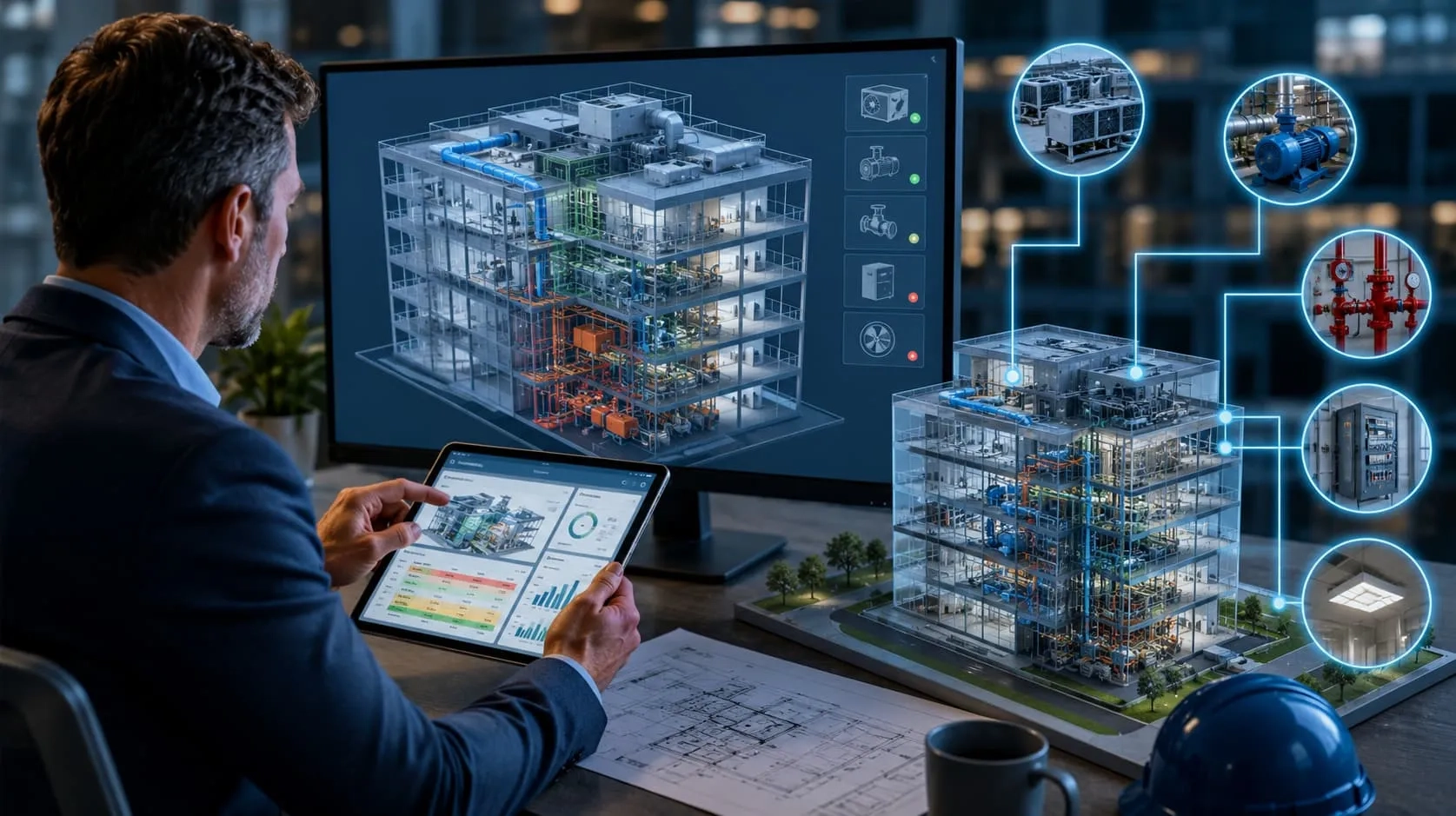
As telecom networks grow more complex with 5G and beyond, traditional approaches can no longer keep up. The combination of 3D BIM and digital twins enables smarter, data-driven telecom infrastructure—from design and deployment to real-time monitoring and optimization. This article explores how these technologies are transforming the future of telecom infrastructure.
Challenges in traditional telecom infrastructure
Manual inspections and increased safety risks
Conventional telecom operations depend heavily on physical site inspections to assess towers, antennas, and supporting structures. These inspections are not only time-consuming but also expose technicians to hazardous working conditions, especially at height or in remote locations. As a result, issues are often identified late, increasing the risk of failures and unplanned downtime.
Outdated and inconsistent documentation
Many telecom assets are supported by legacy drawings, spreadsheets, or disconnected records that are rarely updated after construction. Inconsistent or inaccurate documentation creates confusion during maintenance and upgrades, leading to errors, rework, and slow decision-making across project teams.
Fragmented asset management systems
Telecom infrastructure is typically managed through multiple, unconnected platforms for design, operations, and maintenance. This lack of integration makes it difficult to gain a unified view of assets, reduces operational efficiency, and limits collaboration between engineering, operations, and management teams.
Inefficient upgrade planning due to limited spatial insight
Without accurate 3D spatial data, planning network expansions or technology upgrades—such as 5G rollouts—becomes complex and risky. Design conflicts, space constraints, and structural limitations are often discovered late, causing redesigns and delaying project timelines.
High operational costs and delayed deployment
The combined impact of manual inspections, poor data visibility, and fragmented workflows significantly increases operational and capital costs. These inefficiencies slow down deployment, reduce network agility, and ultimately affect service quality and competitiveness in an increasingly demanding telecom market.
The role of 3D BIM in telecom infrastructure
3D BIM plays a foundational role in transforming how telecom infrastructure is designed, delivered, and managed. Unlike traditional approaches, it provides a data-rich, intelligent model that supports the entire lifecycle of telecom assets—from planning and construction to operation and future upgrades.
What is 3D BIM?
3D Building Information Modeling (BIM) is a digital representation of physical and functional characteristics of infrastructure assets. Unlike traditional CAD models, which focus mainly on 2D drawings or basic 3D geometry, 3D BIM creates intelligent models that combine geometry with structured data.
Each telecom component—such as towers, antennas, cable trays, shelters, and foundations—is modeled with embedded information, including materials, dimensions, equipment specifications, load capacity, and system metadata. This allows stakeholders to not only visualize the infrastructure in 3D, but also understand how it performs, connects, and evolves over time.
Read more: The comprehensive 3D bim modeling explanation to start BIM journey successful
How 3D BIM models are created
The creation of accurate 3D BIM models for telecom infrastructure often begins with capturing real-world conditions. Advanced technologies such as drones, LiDAR scanning, and photogrammetry are widely used to collect high-resolution spatial data, even in complex or hard-to-access environments.
This data is processed into point clouds, which serve as a precise digital snapshot of existing conditions. BIM specialists then convert these point clouds into structured, intelligent 3D models that reflect actual site geometry and asset locations. The result is a highly accurate digital model that supports design validation, retrofit planning, and future expansion with confidence.
Benefits of 3D BIM in telecom
One of the key advantages of 3D BIM is its ability to validate designs and detect clashes early in the project lifecycle. Potential conflicts between structural elements, equipment, and cable routing can be identified and resolved before construction, reducing costly rework.
3D BIM also improves planning and permitting by providing clear, visual documentation that helps stakeholders and authorities better understand design intent and spatial constraints. All project data is stored in a centralized digital environment, ensuring consistency, traceability, and easy access throughout the asset lifecycle.
Most importantly, 3D BIM enhances collaboration among designers, contractors, operators, and owners. By working from a shared, data-rich model, teams can communicate more effectively, make faster decisions, and deliver telecom infrastructure that is more reliable, scalable, and future-ready.
Digital twins: moving beyond static models
While 3D BIM provides an accurate and intelligent snapshot of telecom infrastructure, digital twins take this concept a step further by transforming static models into living, continuously evolving systems. By connecting virtual models with real-world data, digital twins enable telecom operators to monitor performance, predict issues, and optimize assets in real time.
Defining digital twins
A digital twin is a dynamic virtual representation of a physical telecom asset, such as a tower, rooftop installation, or data facility. Unlike static models that reflect conditions at a single point in time, digital twins continuously mirror the current state of the physical asset.
This is achieved through real-time data streams from IoT sensors that capture information such as structural movement, equipment load, temperature, wind, vibration, and power consumption. As conditions change in the physical world, the digital twin updates instantly, providing an always-accurate view of asset health and performance.
How digital twins integrate with 3D BIM
3D BIM serves as the foundation of a digital twin by providing the detailed, data-rich 3D model of the telecom infrastructure. This BIM model defines geometry, components, and relationships, forming the visual and informational backbone of the twin.
On top of this foundation, live data and analytics layers are added. Sensor inputs, operational data, and performance metrics are integrated into the BIM model, enabling real-time simulations and scenario analysis. This integration allows operators to test “what-if” scenarios, assess the impact of environmental conditions, and make informed decisions based on real-time insights rather than assumptions.
Use cases in telecom
One of the most valuable applications of digital twins in telecom is predictive structural health monitoring. By analyzing sensor data over time, digital twins can detect early signs of fatigue, deformation, or abnormal behavior, allowing maintenance teams to intervene before failures occur.
Digital twins also support real-time simulation of loading, vibration, and environmental conditions such as wind or temperature changes. This is especially critical for towers and rooftop installations, where structural stability directly affects network reliability and safety.
In addition, digital twins enable automated maintenance alerts and lifecycle forecasting. Equipment performance can be tracked continuously, maintenance can be scheduled proactively, and asset lifespan can be predicted more accurately. This shift from reactive to predictive maintenance reduces downtime, lowers costs, and ensures more resilient telecom infrastructure.
Read more: Bim vs digital twin: Key differences and when & how to use them
Real-world benefits of combining 3D BIM and digital twins
When 3D BIM and digital twins are combined, telecom infrastructure moves from being merely well-documented to truly intelligent. This integration delivers tangible, real-world benefits across design, construction, operation, and long-term asset management.
Faster project turnaround and deployment times
With accurate 3D BIM models as a foundation and real-time insights from digital twins, project teams can identify design issues, spatial constraints, and constructability challenges early. This reduces redesign, minimizes rework, and accelerates approvals, enabling faster network deployment - especially critical for large-scale rollouts such as 5G and beyond.
Lower operational costs and reduced downtime
Digital twins enable continuous monitoring and predictive maintenance, allowing operators to address potential failures before they disrupt services. By avoiding emergency repairs and unplanned outages, telecom providers can significantly reduce operational costs while improving network reliability and service continuity.
Enhanced safety through remote monitoring
Remote monitoring powered by digital twins reduces the need for frequent on-site inspections, particularly in hazardous or hard-to-access locations. Engineers can assess asset conditions, structural performance, and environmental impacts virtually, improving worker safety while maintaining high operational standards.
Better stakeholder collaboration and transparency
A shared 3D BIM–based digital twin creates a single source of truth for all stakeholders, including designers, contractors, operators, and owners. Real-time data visibility and clear 3D visualization improve communication, align decision-making, and increase transparency throughout the project lifecycle.
Scalable asset lifecycle management
As telecom networks continue to expand, managing assets at scale becomes increasingly complex. The combination of 3D BIM and digital twins provides a structured, data-driven framework that supports asset tracking, performance analysis, and lifecycle planning. This scalability ensures that telecom infrastructure remains adaptable, resilient, and ready for future technological advancements.
At Harmony AT, we help telecom operators and infrastructure partners unlock the full potential of their projects with advanced BIM services tailored to the unique demands of modern network environments. Our team combines deep industry expertise with cutting-edge tools to deliver accurate 3D BIM modeling, seamless integration with digital twin ecosystems, and data-driven workflows that enhance design quality, reduce risk, and streamline operations. Whether you’re planning new deployments, upgrading existing assets, or optimizing long-term maintenance, Harmony AT’s BIM solutions provide the clarity, precision, and collaboration you need to build smarter, more resilient telecom infrastructure.
Discover how Harmony AT’s BIM services can help you build smarter, safer, and future-ready telecom infrastructure—contact us today to get started
Categories