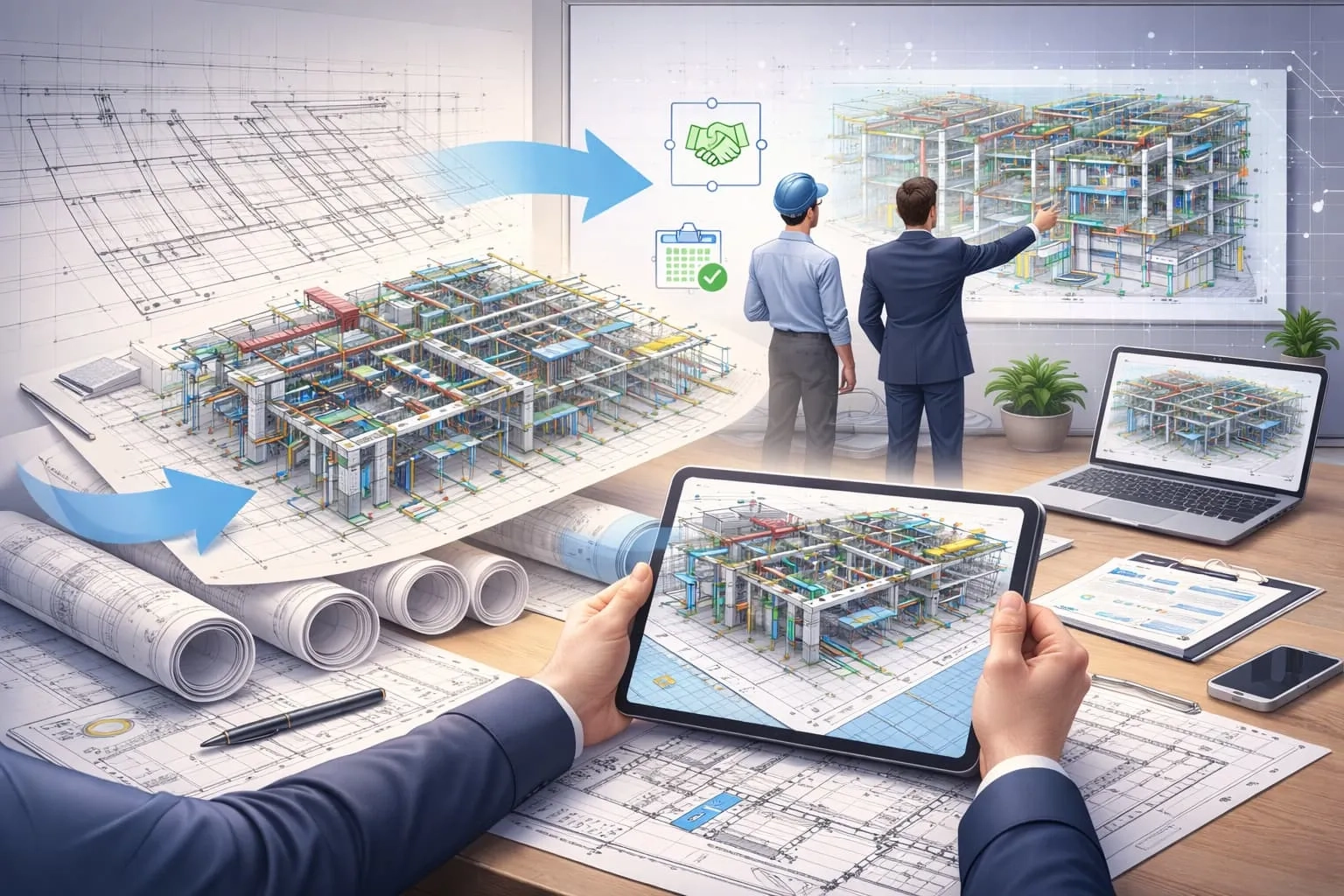
厳しい納期への対応、建設コストの高騰、そして設計段階で発生する干渉や不整合――こうした課題に直面しているのは、決して貴社だけではありません。
多くのAEC企業では、いまだに分断されたワークフローに依存しており、その結果、設計・施工の各工程で時間やコストのロスが発生しています。
一方で、成果を上げている先進企業はすでに異なるアプローチを採用しています。建築設計BIMモデリングを活用することで、関係者間の連携を強化し、設計ミスや手戻りを未然に防ぎながら、プロジェクト全体の効率化とコスト削減を実現しています。
では、こうした企業は具体的にどのような取り組みを行っているのでしょうか。また、その手法を自社プロジェクトへどのように導入できるのでしょうか。本記事では、そのポイントを詳しく解説します。
Architectural BIM Modelingとは何か
2D CADとの違い
建築設計BIMモデリング(Architectural BIM Modeling)は、従来の図面作成を中心とした設計手法とは異なり、建物に関する情報を一元管理できる3Dモデルを構築する手法です。
従来のように平面図・立面図・断面図を個別に作成するのではなく、壁やドア、仕上げ材、数量情報、性能データなどを含む統合的なモデルを作成します。
そのため、モデル内で変更を加えると関連する図面や情報にも自動的に反映され、設計全体の整合性を維持しやすくなります。これにより、情報の不一致や更新漏れを大幅に減らすことができます。
一方、2D CADでは図面ごとに個別管理されることが多く、設計変更が発生した際には複数の図面を手作業で修正する必要があります。その結果、図面間の不整合や修正漏れが発生しやすく、手戻りによるコスト増加につながるケースも少なくありません。
BIMでは、建築設計者、構造・設備エンジニア、発注者などの関係者が同じモデルを共有しながら作業を進めることができます。単一の情報基盤を活用することで、プロジェクト全体の情報共有や調整がスムーズになります。
さらに重要なのは、建築設計BIMモデリングが単なるソフトウェアではなく、設計から施工、運用までを含めた業務プロセスそのものを最適化する考え方であるという点です。従来のCAD中心のワークフローと比較して、より早い段階で意思決定を行うことができ、不確実性の低減や業務効率の向上につながります。

BIMを活用しないプロジェクトでは、どこで時間とコストが失われるのか
多くのプロジェクトでは、施工が始まる前の設計段階からすでに時間やコストのロスが発生しています。その主な原因の一つが、分断された設計ワークフローです。
BIMを活用していない環境では、各チームが個別の図面やデータをもとに作業を進めることが多く、情報共有や調整を手作業に頼らざるを得ません。また、関係者ごとに認識や設計条件が異なることもあり、後工程で問題が発覚するリスクが高まります。その結果、設計段階では見過ごされていた小さな問題が、施工段階で大きな手戻りや追加コストにつながるケースも少なくありません。
建築・構造・設備間で発生する設計干渉
代表的な課題の一つが、建築・構造・設備(MEP)間の調整不足による設計干渉です。
- 空調ダクトが梁と干渉する
- 配管が構造部材と交差する
- 天井内で複数の設備が設置スペースを取り合う
統合されたモデルが存在しない場合、こうした干渉は設計段階で見落とされやすく、多くの場合は施工段階になってから発覚します。
しかし、施工開始後の修正には追加コストや工程変更が伴うため、プロジェクト全体に大きな影響を及ぼします。
建築設計BIMモデリングを活用すれば、建築・構造・設備の情報を一つのモデル上で統合的に確認できるため、干渉を早期に発見し、施工前に解決することが可能です。
手作業による修正が業務負担を増大させる
従来の設計ワークフローでは、小規模な設計変更であっても複数の図面を個別に修正しなければなりません。
- 平面図・断面図・立面図をそれぞれ更新する必要がある
- 更新漏れや図面間の不整合が発生しやすい
- 修正内容の確認や再調整に多くの時間を要する
その結果、本来であれば短時間で完了する作業でも、関係者間の確認や図面修正が重なり、対応に数日を要するケースもあります。
一方、建築設計BIMモデリングでは、モデル内で行った変更が関連する図面や情報へ自動的に反映されるため、修正作業の効率化と設計情報の整合性向上を同時に実現できます。
関係者間のコミュニケーション不足
建築設計では、建築士、エンジニア、施工会社、発注者など多くの関係者が関わります。しかし、従来のワークフローでは、それぞれが異なる環境で作業を進め、メールやPDF、個別の図面データを通じて情報共有を行うケースが少なくありません。
- 異なるバージョンの図面や資料が混在する
- 関係者間で認識のずれが生じる
- 確認や承認に時間がかかり、工程遅延につながる
共通の情報基盤がない場合、同じ内容の確認や調整が繰り返されることになり、結果として設計ミスや手戻り、追加コストの発生につながる可能性があります。
建築設計BIMモデリングを導入することで、関係者全員が同じモデルと最新情報を共有できるようになり、情報伝達の精度向上や意思決定の迅速化を図ることができます。その結果、プロジェクト全体の進行をより円滑に進めることが可能になります。
数量拾いの精度不足がコスト超過につながる
BIMを活用していない場合、数量拾いは手作業や表計算ソフトを用いて行われることが多く、人的ミスが発生しやすい環境になりがちです。
- 寸法の計測ミスや拾い漏れが発生する
- 設計変更後に数量情報の更新が追いつかない
- 見積りの精度が低下しやすい
こうした問題は、予算超過や追加費用の発生につながるだけでなく、発注者や施工会社にとって大きなリスクとなります。
建築設計BIMモデリングを活用すれば、モデルに含まれる建築要素と数量情報を連携して管理できるため、設計変更があった場合でも数量を迅速に確認・更新できます。その結果、積算や見積りの精度向上につながり、予算管理の透明性と信頼性を高めることができます。
建築設計BIMモデリングはどのように時間を削減するのか
建設プロジェクトでは、スケジュール管理がプロジェクトの成否を左右する重要な要素の一つです。
建築設計BIMモデリングは、従来の手作業中心の設計プロセスを効率化し、関係者間の情報共有や調整を円滑にすることで、設計から施工までの各工程における時間的なロスを削減します。
早期の干渉チェックによる効率的な調整
BIMの大きなメリットの一つは、施工前の段階で干渉を発見し、対策を講じられることです。
- 建築・構造・設備(MEP)の情報を同一モデル上で管理できる
- 干渉箇所を設計段階で把握しやすい
- 施工開始後の手戻りや設計変更を減らせる
従来は施工段階で発覚していた問題も、BIMを活用することで設計段階から確認・調整できるため、工期への影響を最小限に抑えることが可能です。
その結果、想定外のトラブルによる工程遅延を防ぎ、プロジェクトをより安定的に進めることができます。
建築設計BIMモデリングを活用することで、建築・構造・設備の整合性を事前に確認できるため、施工現場での追加調整や手戻りの削減につながります。
統合モデルによる情報共有の効率化
BIMでは、関係者全員が共通のモデルを参照しながら作業を進めることができます。
- 図面やデータのバージョン管理を効率化できる
- メールや会議による確認作業を減らせる
- 常に最新の情報を共有できる
これにより、関係者間の調整にかかる時間を削減し、よりスムーズなプロジェクト運営が可能になります。
また、建築設計BIMモデリングを共通の情報基盤として活用することで、設計者、エンジニア、施工会社、発注者の間で情報共有の精度が向上し、迅速な意思決定を支援します。
設計検討と意思決定の迅速化
BIMでは、設計変更の内容がモデル全体に自動的に反映されます。
- 一度の修正で、平面図・断面図・集計表など関連情報を同時に更新できる
- 複数の設計案を効率的に比較・検討できる
- 発注者や関係者との合意形成を進めやすい
従来であれば複数の図面を個別に修正する必要があり、多くの時間を要していました。しかし、BIMを活用することで設計変更への対応を効率化できるため、設計検討から承認までのプロセスを大幅に短縮できます。
建築設計BIMモデリングを活用することで、設計者は図面修正に追われる時間を減らし、より早い段階で最適な設計判断を行うことが可能になります。
図面作成と数量集計の効率化
BIMでは、従来の設計業務で多くの時間を要していた作業を効率化できます。
- 図面の自動生成
- 数量集計表の自動作成
- 設計変更時の自動更新
これにより、繰り返し発生する作業負担を軽減し、設計チームは設計品質の向上や課題解決といった、より重要な業務に集中できるようになります。
建築設計BIMモデリングを活用することで、図面作成や数量確認の効率が向上し、プロジェクト全体の生産性向上につながります。
BIMがもたらす時間削減効果
情報共有の効率化、設計調整の高度化、各種業務の自動化を組み合わせることで、建築設計BIMモデリングはプロジェクト全体の時間短縮に大きく貢献します。
- 設計から承認までの期間を短縮できる
- 手戻りや再作業を削減できる
- 関係者間の連携を円滑にできる
BIMは単に作業スピードを高めるためのツールではありません。遅延や手戻りの原因となる課題を早期に把握し、プロジェクトをより効率的かつ確実に進めるための基盤として機能します。
BIMはどのようにプロジェクトコストを削減するのか
先進的なAEC企業にとって、BIMは単なる設計ツールではありません。プロジェクト全体のコストを適切に管理し、収益性を向上させるための重要な仕組みとして活用されています。
BIMの大きな特長は、施工段階で発生する問題を設計段階で把握し、事前に対応できることです。これにより、手戻りや工程遅延といったコスト増加要因を未然に防ぐことができます。
手戻りの削減によるコスト低減
建設プロジェクトにおいて、手戻りは大きなコスト増加要因の一つです。
BIMを活用していない場合、設計ミスや調整不足が施工段階で発覚することも少なくありません。その結果、現場での修正作業が必要となり、追加の人件費や材料費が発生します。
- 現場での修正作業に追加コストが発生する
- 工程の遅れが他の工種にも影響を及ぼす
- 工期延長による間接コストが増加する
建築設計BIMモデリングを活用すれば、干渉や設計上の不整合を設計段階で発見・解決できるため、施工中の手戻りを大幅に削減できます。
正確な数量情報による材料コストの最適化
BIMモデルでは、モデルに登録された情報をもとに数量を集計できるため、より正確な積算が可能になります。
- 設計変更時にも数量情報を迅速に更新できる
- 手計算によるミスを減らせる
- 設計内容と調達計画の整合性を確保しやすい
これにより、材料不足による工程遅延や過剰発注による無駄なコストを抑えることができます。
建築設計BIMモデリングを導入することで、設計情報と数量情報を一元的に管理できるようになり、積算や予算管理の精度向上につながります。
設計変更や追加対応の抑制
設計変更や追加工事は、予算超過の大きな要因となります。
その原因としては、設計内容の認識不足や関係者間の情報共有不足、設計情報の不足などが挙げられます。BIMを活用することで、
- 設計内容を視覚的に確認できる
- 関係者間で認識を共有しやすくなる
- 設計段階で課題を発見しやすくなる
といった効果が期待できます。
その結果、施工開始後の設計変更や追加対応を減らし、予算管理の精度向上につなげることができます。
建築設計BIMモデリングを活用することで、発注者・設計者・施工会社が早い段階から共通認識を持ちながらプロジェクトを進めることができ、後工程で発生しやすい仕様変更や追加コストの発生を抑えることが可能になります。
施工リスクの低減
建設プロジェクトでは、設計段階で見落とされた干渉や施工上の課題が、工期遅延や追加コストの発生につながることがあります。
BIMを活用することで、施工前の段階から計画内容を検証し、リスクを事前に把握することが可能になります。
- 干渉や施工上の課題を事前に確認できる
- 関係者間で施工計画を共有しやすくなる
- 施工前に問題点を整理・調整できる
- 現場での想定外のトラブルを減らせる
こうした取り組みにより、施工段階で発生する手戻りや追加対応を抑え、プロジェクト全体の安定した進行につなげることができます。
建築設計BIMモデリングは、単に3Dモデルを作成するための手法ではありません。施工前にリスクを可視化し、関係者間で計画を共有・検証することで、より安全で効率的なプロジェクト運営を支援します。
なぜ先進企業は建築設計BIMモデリングをアウトソーシングするのか
近年、建設プロジェクトの大規模化・複雑化が進む一方で、納期や品質に対する要求も高まっています。
こうした状況の中、多くのAEC企業では、すべての業務を社内で対応するのではなく、必要に応じて外部の専門パートナーを活用するケースが増えています。
社内でBIMチームを拡大する場合、人材採用や教育、運用体制の整備に多くの時間とコストが必要です。一方、アウトソーシングを活用することで、必要なタイミングで専門的な技術やリソースを確保しやすくなります。建築設計BIMモデリングは、こうしたアウトソーシングの対象となることが多い業務の一つです。
企業がアウトソーシングを活用する理由は、単なる人件費の削減だけではありません。専門人材の活用による品質向上、業務負荷の平準化、プロジェクト対応力の強化など、さまざまなメリットが期待できるためです。
人員を増やさずに柔軟な体制構築が可能
社内でBIM人材を採用・育成するには、多くの時間とコストがかかります。また、プロジェクト量の増減に応じて人員を調整することも容易ではありません。
アウトソーシングを活用することで、業務量に応じて必要なリソースを柔軟に確保できます
- 採用や教育にかかる時間を削減できる
- 固定的な人件費や管理負担を抑えられる
- 必要なタイミングで専門人材を活用できる
こうした柔軟性は、複数のプロジェクトを並行して進める企業や、短納期案件への対応が求められる企業にとって大きなメリットとなります。
建築設計BIMモデリングを外部パートナーへ委託することで、社内体制を大きく変更することなく、プロジェクト規模に応じたリソース確保が可能になります。
専門人材や高度なノウハウを活用できる
アウトソーシングを活用することで、豊富な経験を持つBIM技術者や専門チームの知見を活用できます。
- 海外プロジェクトの経験を持つ技術者の支援を受けられる
- 高度なBIM運用ノウハウを活用できる
- 多様なプロジェクトで培われた知見を取り入れられる
自社だけで専門人材を確保することが難しい場合でも、外部パートナーを活用することで必要な技術力や経験を補うことができます。
建築設計BIMモデリングを外部委託することで、コストを抑えながら専門性の高いサービスを活用できる点も大きなメリットです。
コア業務に集中できる
建築設計事務所やエンジニアリング企業にとって、BIMモデリングは重要な業務の一つです。しかし、企業によっては、設計提案や顧客対応など、より注力すべき業務が存在します。
モデリング業務の一部を外部パートナーへ委託することで、社内チームは次のような業務に集中できます。
- 設計品質の向上
- 顧客との関係構築
- プロジェクトマネジメント
- 重要な意思決定
業務の役割分担を適切に行うことで、限られた社内リソースをより効果的に活用できるようになります。
建築設計BIMモデリングの外部活用は、単なるコスト削減ではなく、企業全体の生産性向上につながる選択肢の一つと言えます。
アウトソーシングに対する考え方の変化
近年、多くの企業ではアウトソーシングを単なるコスト削減策としてではなく、事業運営を支える手段の一つとして捉えるようになっています。
特に人材不足や案件の大型化が進む中で、必要なリソースを柔軟に確保できることは大きな価値を持ちます。
アウトソーシングを適切に活用することで、
- プロジェクト対応力の向上
- 短納期案件への対応
- 業務負荷の平準化
- 専門人材の活用
といった効果が期待できます。
建築設計BIMモデリングのアウトソーシングは、企業が限られた人員でより多くのプロジェクトに対応し、品質と納期の両立を目指すための有効な選択肢の一つです。
なぜArchitectural BIM ModelingになぜHarmony ATが選ばれているのか
BIM活用を強化したい一方で、品質や納期も重視したい企業にとって、Harmony ATは建築設計BIMモデリングの専門パートナーとして幅広い支援を提供しています。
Harmony ATは、国際プロジェクト向けのBIMモデリング業務において豊富な実績を有しており、次のような強みがあります。
- 米国・EUの基準に対応した専任BIMチーム
- プロジェクト規模や要件に応じた柔軟な契約・運用体制
- QA/QCプロセスに基づく品質管理と納期対応
- 建築・構造・設備(MEP)を横断した調整力
- 多様なプロジェクトへの対応実績
単発案件のサポートから長期的なBIM運用支援まで、プロジェクトの状況に応じたサービスを提供しています。
建築設計BIMモデリングを戦略的に活用することで、品質を維持しながら業務効率を向上させ、変化するプロジェクト要件にも柔軟に対応できる体制づくりを支援します。
まずはご相談ください
より速く、よりスマートにプロジェクトを拡張する準備はできていますか。